
Plantar Fasciitis
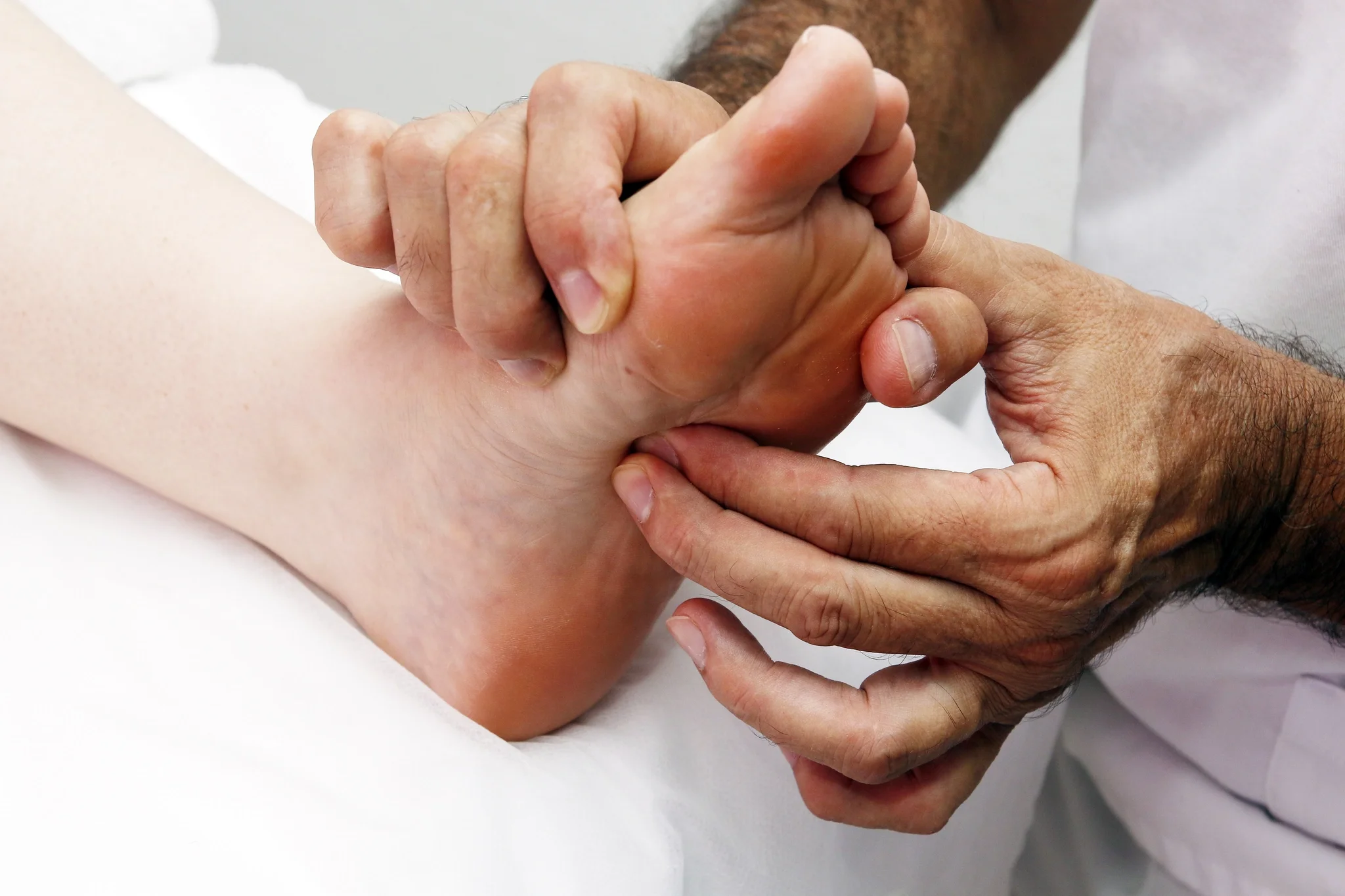
Acupuncture for plantar fasciitis in Denver works best when it treats the whole kinetic chain, not just the heel. That's the core idea behind Backupuncture of Denver's sports & orthopedic approach, and it's the difference between a session that fades in a week and one that actually changes how you move.
This guide is for active Denver area residents: trail runners logging weekly mileage, hikers transitioning into ski season, and amateur athletes who don't want to sit out a season over heel pain. By the end, you'll know what's driving your plantar fasciitis, what acupuncture can realistically do about it, and what a session at a Denver clinic involves.
Prerequisites: You should already suspect plantar fasciitis based on symptom pattern (below), and you should be willing to combine treatment with changes to training load or footwear. Acupuncture without addressing the mechanical cause tends to produce short-lived relief.
Confirm This Is Actually Plantar Fasciitis First
Plantar fasciitis causes a specific pain pattern, and confirming it saves you from booking treatment for the wrong problem. According to the Mayo Clinic, plantar fasciitis "typically causes a stabbing pain in the bottom of your foot near the heel," and "the pain is usually the worst with the first few steps after awakening." A 2021 Sports Health systematic review adds that the tenderness sits in "a localized area of maximal tenderness over the anteromedial aspect of the heel" (the front of the inside part of the heel where it meets the arch).
Check whether your pain also spikes after sitting for a while or right after a run, not just first thing in the morning. Heel pain has several look-alikes, and other conditions don't respond to the same treatment.
Step 1: Identify What's Driving Your Plantar Fasciitis
Note any recent changes. Record shifts in footwear, standing or running surface, or training intensity, especially the switch from trail season into ski season, which is a classic Denver trigger. A recent trip with a lot more walking than usual is often a typical trigger as well.
Check your calf and ankle mobility. Test how far your ankle dorsiflexes (foot flexing upward, toward you) and whether your calves feel chronically tight after activity.
For runners, log your weekly training volume. Write down your running mileage for the past month, including trail and road miles. Then compare your mileage against the risk threshold: a 2024 cohort study in Medicine & Science in Sports & Exercise followed 1,206 participants for a year and found that runners logging more than 40 km a week had six times higher odds of developing plantar fasciitis than those running 6 to 20 km a week. If you're a Denver runner stacking big trail weekends on top of a road habit, this is worth taking seriously.
The 2023 Mayo Clinic clinical review of plantar fasciopathy lists overpronation, reduced ankle dorsiflexion, a tight posterior chain, and proximal muscle weakness as biomechanical risk factors. The Sports Health review connects tight calves specifically: a tight triceps surae increases plantarflexion during running gait, and that raises tension on the plantar fascia through the Achilles.
One caveat worth knowing: the same Sports Health meta-analysis found that training volume alone wasn't a significant risk factor once pooled across studies, and neither was foot arch type. Don't assume a single cause. Mileage, footwear, calf tightness, and gait mechanics usually combine.
Step 2: Understand Why Sports Acupuncture Treats the Whole Chain
Sports acupuncture treats plantar fasciitis as a structural problem, not an isolated sore spot. Here at Backupuncture of Denver, our clinical philosophy is structural, not symptom-by-symptom. For example, a knee problem might get treated with points that address hip or ankle alignment, not just the knee itself (see our explanation of our sports and orthopedic acupuncture approach). Applied to a heel, that logic points toward needling the calf, ankle, and gait-related points (such as leg, lumbar, and pelvis points) that feed tension into the fascia, rather than treating the heel in isolation.
That's a different starting point than the standard home-care escalation path. The Cleveland Clinic outlines the conventional route: over-the-counter NSAIDs, rest, icing, orthotics, and stretching first, with corticosteroid injections or platelet-rich plasma (PRP) reserved for cases that don't improve. Acupuncture sits alongside that conservative tier, but it works the mechanism from a different angle:
gait correction through structural alignment,
neuromuscular retraining through local and distal needling, and
dry needling of the tight calf and ankle tissue that feeds tension into the inflamed area,
rather than mere inflammation control and waiting for eventual resolution.
Step 3: Set Accurate Expectations for What Acupuncture Can Do
A 2024 network meta-analysis in Cureus pooled 32 studies covering roughly 2,390 participants and found acupuncture produced the best one-month pain score among the non-surgical treatments compared, a mean difference of -1.33 on the visual analog scale versus placebo.
A 2017 systematic review in the Singapore Medical Journal reviewed four randomized controlled trials and found pain reduced on both pain and disability scales after four to eight weeks of treatment. One randomized trial tested a specific distal point, PC7, for heel pain, and found it outperformed a control point selected for a different condition, which suggests point selection matters, not just the act of needling. Distal points are a distinctive part of acupuncture's methodology, and researchers believe they can influence pain and inflammation at a local site through effects on the nervous system, though the exact mechanism is still being studied.
Step 4: Know What a Session Involves
Book an initial evaluation and treatment, which are typically longer than follow-up visits. Backupuncture of Denver's first session typically lasts 60-90 minutes to allow for a full evaluation and assessment, while subsequent visits are under an hour.
Expect needle retention, not a quick poke. Needles remain in place for 20-40 minutes while you relax in a comfortable position.
Ask what else might be used. Backupuncture of Denver, for example, also offers dry needling, cupping, and gua sha alongside acupuncture, and a practitioner may layer these depending on how tight your calf and ankle are.
Understand acupuncture safety standards. Acupuncture is extremely safe when performed by a licensed, trained practitioner using sterile, single-use needles, with minimal side effects. The clinical literature reports only minor effects across studies, like bruising, swelling, and soreness, with no serious common adverse events.
Step 5: Pair Treatment with Load Management
Acupuncture works better alongside changes to what's stressing the fascia, not instead of them. The 2023 Mayo Clinic review recommends exercises to build intrinsic foot strength, shoe modifications, a heel cup or orthotics, and night splinting as conservative management to run in parallel.
This matters because plantar fasciitis has a real recurrence risk. The 2024 cohort study found that a prior history of plantar fasciitis carries 5.1 times higher odds of re-injury. If you treat the pain without adjusting mileage, footwear, or calf tightness, the same flare-up tends to return once your training season ramps back up.
Troubleshooting
Pain persists past 6 to 8 weeks of consistent treatment. This is roughly where the research shows acupuncture's advantage over PRP, corticosteroid injection, and shockwave therapy starts to narrow. Talk to your provider about escalating or combining approaches.
Pain returns after initial relief. A course of treatment is usually repeated over multiple sessions until improvement plateaus, and your practitioner should set an individualized plan and timeline with you. Recurring pain may also mean the mechanical driver, whether mileage, footwear, or calf tightness, hasn't been addressed alongside the needling.
You're running more than 40 km a week. That volume alone carries six times higher odds of plantar fasciitis per the 2024 cohort study. A training adjustment likely needs to accompany any treatment plan.
Your symptoms don't match the classic morning-pain pattern. Reconsider the diagnosis before continuing treatment. Other causes of heel pain exist, and they don't respond to the same protocol. Lumbar nerve root impingement or sciatica, for example, may manifest as sharp, burning pain in the foot, sometimes with pins-and-needles sensations or numbness, and occasionally without significant back pain. Here at Backupuncture of Denver, we assess your history and analyze your spinal alignment to determine if this is a potential issue we should address.
Next Step
Book an initial assessment with a Denver clinic that practices orthopedic and sports acupuncture, such as Backupuncture of Denver (950 S Cherry St, Ste 1675, Denver, CO 80246; 720.370.2711), so a practitioner can evaluate your gait, calf tightness, and heel pain pattern before you start treatment.