
Tennis Elbow (Lateral Epicodylitis)
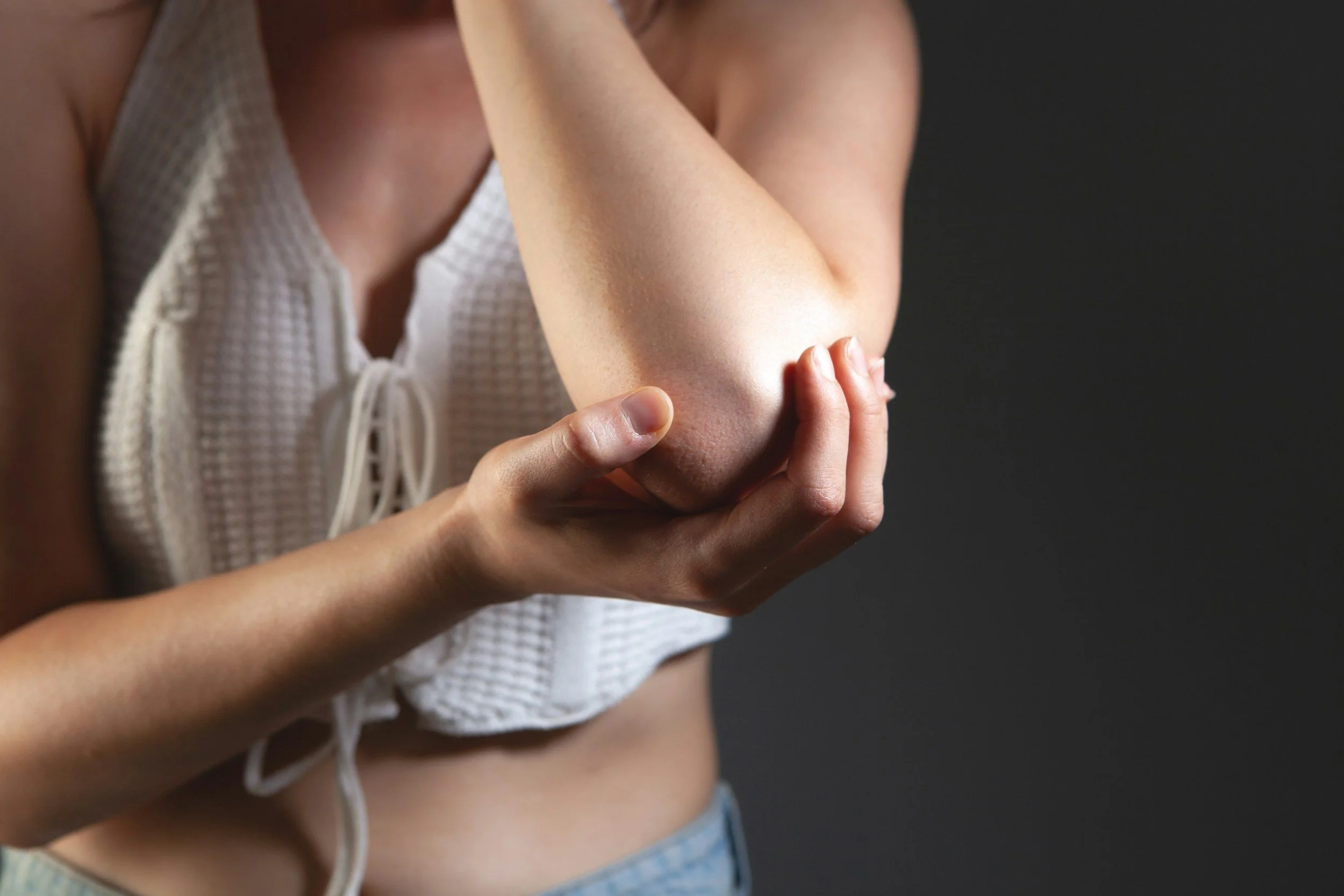
Acupuncture for Tennis Elbow in Denver: A Faster Path Than Waiting It Out
Tennis elbow—also called lateral epicondylitis or lateral elbow tendinopathy—causes pain where the forearm muscles attach to the outside of the elbow. It commonly hurts when gripping, lifting, typing, climbing, using tools, or extending the wrist.
Despite the name, most people with tennis elbow do not play tennis. Repetitive computer work, weight training, painting, carpentry, plumbing, and other gripping activities can produce the same injury.
Tennis elbow often improves naturally, but recovery can take six months and sometimes as long as 18 months. Acupuncture may provide earlier pain relief and help restore function while the tendon recovers.
Is Your Elbow Pain Lateral Epicondylitis?
Typical symptoms include:
Pain or tenderness on the outside of the elbow
Pain when gripping, lifting, or shaking hands
Pain with wrist extension
Reduced grip tolerance
Symptoms linked to repetitive arm or hand activity
The tendon most often involved is the extensor carpi radialis brevis, or ECRB. Repeated loading can create microscopic injury and degenerative changes near its attachment at the elbow.
Not all outer-elbow pain is tennis elbow. Nerve irritation, arthritis, neck problems, and other injuries can cause similar symptoms. Numbness, significant weakness, swelling, loss of motion, or pain following a major injury should be medically evaluated.
What to Expect at Your First Visit
At Backupuncture of Denver, the first appointment typically lasts 60 to 90 minutes. It includes a health history, physical examination, and structural assessment.
We look beyond the painful spot to assess how the elbow, wrist, shoulder, neck, and upper back may be contributing to the problem.
Helpful information includes:
When the pain began
Which movements aggravate it
Changes in sports, work, exercise, or computer use
Previous treatments and their results
This structural approach helps identify patterns that may continue overloading the tendon.
What Happens During Treatment?
Treatment may include acupuncture points near the elbow and forearm, along with supporting points elsewhere in the body.
Needles usually remain in place for 20 to 40 minutes. Follow-up visits generally take less than an hour.
Depending on your condition, treatment may also include:
Dry needling
Electroacupuncture
Cupping
Gua sha
Not every patient needs every technique. The treatment should be selected according to your examination, symptoms, and tolerance.
How Many Sessions Are Needed?
Acupuncture is not usually a one-treatment cure for lateral epicondylitis.
A 2020 systematic review examined 10 randomized controlled trials involving 796 people. The studies used between three and 10 acupuncture sessions, with a median of 10. Acupuncture produced better pain results than medication and local injection-style “blocking” therapy in the included trials.
Other reviews have found rapid short-term improvements in pain, arm function, and strength. The evidence therefore supports acupuncture as a reasonable treatment for faster symptom relief, but it does not prove that acupuncture makes the tendon tissue itself regenerate faster.
Acute conditions may improve within several visits. Longstanding cases often require a longer course. Visits are usually scheduled closer together initially and spaced farther apart as progress becomes stable.
How to Tell Whether Treatment Is Working
Track the same activities from week to week rather than judging progress only by how the elbow feels at rest.
Useful measurements include pain while:
Picking up a mug or pan
Carrying a bag
Gripping or squeezing
Typing or using a mouse
Climbing, lifting, or playing a racquet sport
Signs of improvement include less pain, greater grip tolerance, shorter flare-ups, and less discomfort the following day.
Acupuncture Works Best With Load Management
Pain relief alone does not correct the activity pattern that irritated the tendon.
Treatment usually works best when combined with:
Temporary modification of aggravating activities
Progressive wrist and forearm strengthening
Improved workplace or sports ergonomics
Gradual return to lifting, climbing, or racquet sports
Complete rest can weaken the arm, while repeatedly pushing through increasing pain may prolong the condition. The goal is to find an appropriate level of activity while gradually rebuilding the tendon’s capacity.
What if Progress Stalls?
If symptoms are not improving after a reasonable course of care, the treatment plan and diagnosis should be reassessed.
Possible reasons include:
Continued overloading of the tendon
Involvement of the neck, shoulder, wrist, or radial nerve
An incorrect diagnosis
Insufficient strengthening or rehabilitation
A need for different treatment techniques or another referral
Most cases do not require surgery. However, persistent symptoms that have not responded to six to 12 months of appropriate nonsurgical treatment should be discussed with your broader healthcare team.
Schedule an Evaluation
You do not necessarily have to wait six to 18 months for tennis elbow symptoms to resolve on their own.
Acupuncture may reduce pain, improve function, and make rehabilitation easier while the tendon heals. Your treatment plan should reflect how long the problem has been present, what continues to aggravate it, and the activities you want to return to.
Backupuncture of Denver
950 S Cherry St, Suite 1675
Denver, CO 80246
720.370.2711